Wedding Dress Guide: How to Choose Lace With Confidence

Table of Contents
A wedding dress is the centerpiece of the bridal look, and a lace design can stay timeless for decades. The right gown balances the venue, the season, your budget, and the way you want to move through the day. This guide walks through silhouettes, lace types, fittings, and costs so the decision feels calm instead of rushed.
Start with three facts: where the ceremony takes place, how many hours you will wear the gown, and the total budget including alterations. Those answers narrow the field faster than a stack of inspiration photos. Use the notes below to build a short list before you book a wedding dress appointment.
Wedding Dress Silhouettes: 7 Shapes to Know
Silhouette affects comfort as much as appearance. A ball gown photographs well in a ballroom but can feel heavy on sand, while a sheath moves easily through a garden aisle. Try at least three wedding dress shapes in person before you commit, and bring the shoes you plan to wear.
| Silhouette | Best for | Lace note |
|---|---|---|
| A-line | Most body types; balanced volume | Chantilly overlay adds softness without bulk |
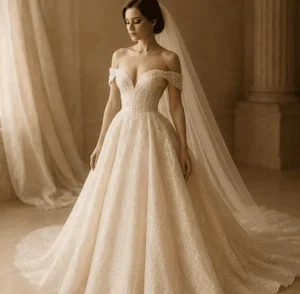
| Ball gown | Formal ballrooms; dramatic photos | A structured bodice keeps lace from collapsing |
| Mermaid | Curve-friendly lines; evening receptions | Stretch lace or applique helps when you sit |
| Trumpet | Subtle flare; dance-heavy receptions | Corded lace holds a clean, sculpted line |
| Sheath | Destination and civil ceremonies | Lightweight guipure travels well |
| Empire | Pregnancy or heat-sensitive brides | Soft tulle under lace stays airy |
| Tea-length | Vintage or backyard weddings | Eyelet and re-embroidered lace suit short hems |
If two shapes feel equally comfortable, choose the one that suits the venue. A formal room rewards volume, while an outdoor setting rewards light fabric and a hem that clears the ground. Our sleek and elegant gown gallery shows how clean lines read in photographs.
Lace Wedding Dress Styles and Fabrics
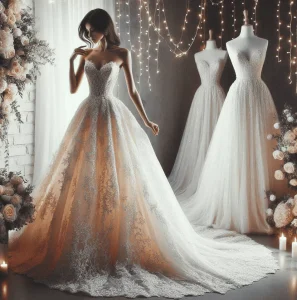
Lace is a family of fabrics, not one material. Chantilly is delicate and sheer, guipure has heavier motifs, Alencon carries a corded outline, and eyelet feels casual. The label matters because two gowns with the same silhouette can wear very differently once the fabric is on your body.
Chantilly and Alencon
Chantilly works best as an overlay on tulle or satin. It softens a wedding dress neckline and adds texture without weight, which makes it a strong choice for summer ceremonies. Alencon is denser and more structured, so it holds shape on a fitted bodice and photographs with visible depth. Both need careful steaming before the ceremony.

Guipure, Eyelet, and Stretch Lace
Guipure has no tulle ground, so its motifs connect directly to each other. That structure makes it ideal for sleeves and overlays that need to keep a shape. Eyelet is lighter and more casual, a natural fit for garden or tea-length styles. Stretch lace contains elastane and moves with the body, which helps fitted silhouettes stay comfortable through dinner and dancing.
What Lace Adds to the Price
Hand-applied lace raises the cost because each motif is cut and placed by hand. A widely available Chantilly overlay may add little to the base price, while a corded Alencon with hand-finished edges can add hundreds. Ask whether the lace is re-embroidered, how the seams are finished, and whether spare motifs are included before you approve the wedding dress order. White lace became a bridal standard after Queen Victoria wore a lace gown in 1840, and the craft behind that look still drives cost today.
How to Match the Gown to Your Venue
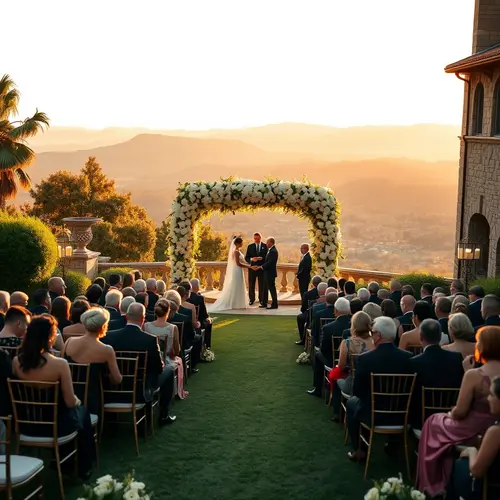
The venue sets the wedding dress fabric weight, the hem length, and the amount of structure you can comfortably wear. A beach ceremony punishes heavy satin and long trains, while a ballroom can carry volume that would look out of place in a garden. Our unique wedding venue guide helps you judge the space before you shop.
Outdoor and Destination Settings
Choose a wedding dress with breathable lining, a hem that clears grass or sand, and a train you can bustle without help. Light lace over tulle moves well in wind, but it also snags on rough surfaces. A sheath or tea-length shape usually works harder in these settings than a full ball gown, and it packs more easily.
Ballroom and Evening Ceremonies
Formal rooms can carry a ball gown, a long train, and denser lace. Keep the bodice structured so the fabric does not collapse under its own weight, and plan a bustle that holds through the first dance. If the ceremony runs into a late reception, choose a lining that will not feel heavy after six hours.
Fittings, Alterations, and Timeline
Most made-to-order wedding dress orders need six to nine months to arrive, followed by two or three fittings. Start shopping nine to twelve months before the date if you want a broad selection. Off-the-rack styles can move faster, but alterations still need six to eight weeks, especially for lace hems and sleeves.
Bring the shoes, undergarments, and any jewelry you plan to wear to every wedding dress fitting. Those details change hem length and posture. Ask the seamstress to show you the bustle before you leave, and practice walking, sitting, and turning in the gown while the alterations are still fresh.

Budget Planning Without the Guesswork
Set the wedding dress budget before the first appointment and keep alterations in a separate line. Alterations often add 10 to 20 percent of the gown price, and lace work sits at the higher end. Accessories, preservation, and cleaning belong in the same plan so the total does not surprise you later.
Ask each salon whether the quoted price includes taxes, shipping, and the first fitting. A lower sticker price with separate lace and rush fees can cost more than a higher quote that includes them. If the budget is tight, spend on the fabric and fit, then save on the veil, shoes, and second look.
When the short list is ready, coordinate the date, the venue, and the fitting schedule in one place. Our complete wedding planning guide covers the order of bookings and the checkpoints that keep a dress decision from slipping.
Frequently Asked Questions
How do I know which silhouette suits me?
Start with the venue and the way you want to move. Try at least three shapes in person, sit and walk in each, and compare photos from the front and side. Comfort and proportion matter more than a label, and a good seamstress can adjust many details.
How far in advance should I order a lace gown?
Allow nine to twelve months for a made-to-order style, including delivery and fittings. Off-the-rack options can be faster, but reserve six to eight weeks for alterations. Peak season and custom lace can add time, so confirm the delivery window in writing.
How much should I budget for alterations?
Plan for 10 to 20 percent of the gown price. Lace hems, sleeves, and a structured bodice sit at the higher end because each motif is handled by hand. Ask for an alteration estimate before you pay the deposit so the total is clear.
A wedding dress should feel like a better version of you, not a costume. Choose a silhouette you can walk, sit, and dance in, then use lace to add texture where it matters. Book fittings early, keep the alteration budget separate, and stop shopping once the gown passes the venue, budget, and comfort checks.

Bellinda Taylor is a senior wedding editor at Best Wedding covering reception design, jewelry, and guest experience. 7+ years, 150+ guides. Method: vendor contracts, trend forecasts, and logistics data. Author of 2,263 wedding guides since 2022.