Reception Style: 7 Essential Formats Decoded
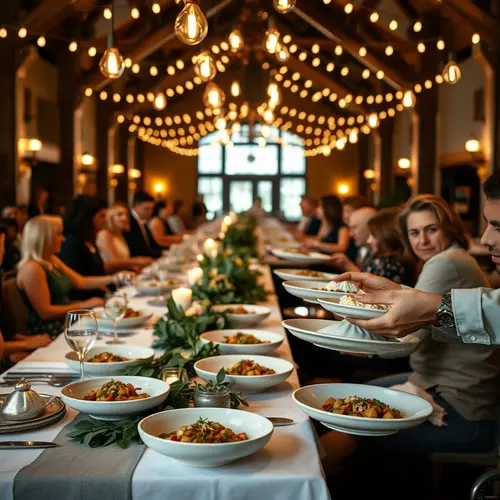
reception style
Table of Contents
Choosing the right reception style fundamentally shapes your wedding’s guest experience, timeline, and budget allocation. Your reception style determines not just how food is served, but influences everything from venue selection to staffing needs and the overall flow of your celebration.
Understanding Reception Style Categories
Wedding receptions break down into two primary decision layers: service format and atmospheric approach. Service format addresses how food and beverages reach your guests, while atmospheric approach defines the visual and experiential tone.
Most couples mistakenly believe reception style only refers to décor aesthetics. The operational format you select impacts per-person costs by $30-80 according to hospitality industry benchmarks, making it a critical financial decision point.
The Seven Core Reception Style Formats
Each format delivers distinct advantages and limitations based on your priorities.
| Format | Typical Cost per Guest | Service Speed | Formality Level |
|---|---|---|---|
| Plated Seated Dinner | $85-150 | Slow (90-120 min) | Formal to Semi-Formal |
| Buffet Service | $45-75 | Medium (45-60 min) | Casual to Semi-Formal |
| Family Style | $65-95 | Medium (60-75 min) | Semi-Formal |
| Cocktail Reception | $50-80 | Fast (continuous) | Casual to Modern |
| Food Stations | $55-85 | Medium-Fast (30-45 min) | Casual |
| Dessert Reception | $25-40 | Fast (continuous) | Casual |
| Brunch Reception | $40-70 | Medium (60-90 min) | Casual to Semi-Formal |
Matching Your Reception Style to Venue Constraints
Your venue’s infrastructure dictates viable options more than personal preference. Plated service requires full kitchen facilities with proper holding equipment and adequate staff areas. Historic venues or outdoor spaces with limited utilities naturally favor stations or cocktail formats.
Guest count creates hard boundaries. Venues accommodating 200+ guests rarely support family-style service efficiently due to table logistics and timing synchronization. Conversely, intimate gatherings under 50 guests make buffet lines feel awkward and disjointed.
The Service Format Decision Framework
Apply this systematic approach to narrow your reception style selection:
- Guest demographics: Elderly attendees or young children benefit from seated service with predictable timing. Young professional crowds adapt well to cocktail formats with mobility.
- Timeline constraints: Evening receptions with hard venue cutoffs require fast-service formats. Open-ended timeframes accommodate leisurely plated meals.
- Dietary complexity: Multiple dietary restrictions favor plated service where individual meals are pre-assigned. Stations and buffets create confusion when navigating allergen concerns.
- Cultural expectations: Certain cultural traditions demand specific service protocols. Research family expectations before finalizing format.
- Interactive elements: If you’re planning extended toasts, complex entertainment, or formal dances, seated service provides structure. Cocktail formats blur these traditional milestone moments.
Atmospheric Styling Within Service Formats
Once you’ve selected a service format, layer in atmospheric elements that reflect your aesthetic vision. A plated dinner executes equally well in rustic barn settings or black-tie ballrooms—the service mechanism stays consistent while visual presentation shifts dramatically.
Modern couples often hybridize formats. A cocktail hour with heavy passed appetizers transitions into a seated main course, combining mobility with structured dining. This approach demands careful coordination with catering teams to prevent timing disasters.
Common Reception Style Myths Debunked
The wedding industry perpetuates several outdated assumptions about reception formats. Buffets aren’t inherently “cheap” or casual—high-end buffets with attended carving stations and premium seafood displays rival plated costs while offering variety.
Cocktail receptions don’t automatically mean guests leave hungry. Properly executed cocktail formats with substantial passed items and stationed heavy appetizers provide 8-12 bites per person across 3-4 hours, meeting nutritional adequacy standards from hospitality guidelines.
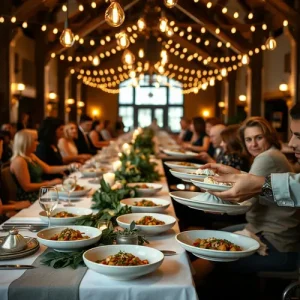
Family-style service isn’t always “communal” or warm. In practice, large tables create serving bottlenecks and anxiety about taking appropriate portions. The idealized communal experience requires tables of 8 or fewer and culturally compatible guest groups.
Expert Perspective on Format Selection
After coordinating 300+ weddings across diverse venues, one pattern emerges consistently: couples who prioritize guest comfort over Instagram aesthetics report higher satisfaction scores. Your reception style should facilitate conversation, minimize wait times, and accommodate mobility needs.
The most successful receptions balance predictability with surprise. Guests appreciate knowing when dinner occurs and where to sit, but welcome unexpected elements like specialty stations or interactive food presentations. This framework applies across all formality levels.
Budget allocation reveals another critical insight. Investing in service quality—proper staff-to-guest ratios, experienced servers, coordinated timing—delivers exponentially better experiences than upgrading from chicken to filet mignon within substandard service frameworks. According to data from major venue management companies, receptions with 1:15 staff ratios receive 40% higher guest satisfaction ratings than those at 1:25 ratios, regardless of food quality.
Making Your Final Reception Style Decision
Test your leading option against practical realities. Request a tasting that simulates actual service conditions—not just food quality but presentation timing and temperature maintenance. Observe how wedding venues execute your preferred format for other events when possible.
Factor in non-obvious costs. Plated service requires precise headcounts finalized weeks in advance, creating stress if RSVPs arrive slowly. Buffets need rental equipment for chafers and serving utensils. Cocktail formats demand more passed labor hours, driving up service charges.
Your reception style becomes the operational backbone supporting all other wedding elements. Select a format aligned with your authentic priorities rather than industry pressure or trend cycles, and your celebration will reflect genuine hospitality that guests remember.